Navigating Specific Sleep Disorders: A Detailed Guide to Insomnia, Apnea, and Restless Legs for Better Diagnosis
Navigating Specific Sleep Disorders: A Detailed Guide to Insomnia, Apnea, and Restless Legs for Better Diagnosis
Struggling with sleep can significantly impact your daily life, but identifying the root cause is often the first, and most challenging, step. This detailed guide aims to help you understand the nuances of specific sleep disorders like insomnia, sleep apnea, and restless legs syndrome (RLS), crucial for achieving a better diagnosis and effective treatment. Many people suffer for years without proper identification of their condition, leading to chronic fatigue, impaired cognitive function, and even serious health risks. Our goal is to demystify the diagnostic process, empowering you with the knowledge to discuss your symptoms accurately with healthcare professionals.
Key Points for Better Diagnosis:
- Symptom Specificity: Understand distinct symptoms for insomnia, sleep apnea, and RLS to guide your observations.
- Professional Consultation: Recognize when to seek a sleep specialist for accurate evaluation.
- Diagnostic Tools: Learn about common tests and methods used to diagnose these conditions.
- Holistic Approach: Consider lifestyle factors and medical history in your diagnostic journey.
- Early Intervention: Emphasize the importance of timely diagnosis for improved health outcomes.
Understanding Insomnia: Causes, Symptoms, and Diagnosis
Insomnia, characterized by difficulty falling asleep, staying asleep, or waking too early with inability to return to sleep, affects millions globally. It's not just about losing sleep; it’s about the quality and restorative power of your sleep. For a better diagnosis, it’s essential to distinguish between acute and chronic insomnia. Acute insomnia lasts for days or weeks, often triggered by stress or life changes, while chronic insomnia persists for at least three nights a week for three months or longer.
Common Symptoms of Insomnia:
- Difficulty initiating sleep: Taking more than 30 minutes to fall asleep.
- Difficulty maintaining sleep: Frequent awakenings during the night.
- Early morning awakenings: Waking up too early and being unable to go back to sleep.
- Non-restorative sleep: Feeling tired upon waking, despite adequate sleep duration.
- Daytime impairments: Fatigue, irritability, difficulty concentrating, or mood disturbances.
Diagnosing Insomnia: A Multifaceted Approach
Insomnia diagnosis typically begins with a thorough medical history and a physical examination. Your doctor will inquire about your sleep patterns, lifestyle, medications, and mental health. A crucial tool is a sleep diary, where you record your sleep habits for 1-2 weeks. This helps identify patterns and potential triggers. Unlike sleep apnea, a formal sleep study (polysomnography) is not always required for diagnosing primary insomnia, but it may be recommended to rule out other sleep disorders that mimic insomnia.
Differentiated Insight: The Evolving Role of Actigraphy
Recent advancements in wearable technology and actigraphy devices are revolutionizing insomnia diagnosis. These wrist-worn devices, increasingly precise, objectively measure sleep-wake cycles over extended periods, offering a less intrusive and more comprehensive view than a single sleep diary. A 2024 study published in the Journal of Sleep Research highlighted how advanced actigraphy, combined with validated questionnaires, significantly improves the accuracy of differentiating true insomnia from perceived sleep difficulties, especially when patients are reluctant or unable to complete detailed sleep diaries. This data-driven approach provides critical insights into sleep efficiency and fragmentation, aiding in a more precise diagnosis of insomnia.
Internal Link: Dive Deeper into Sleep Hygiene
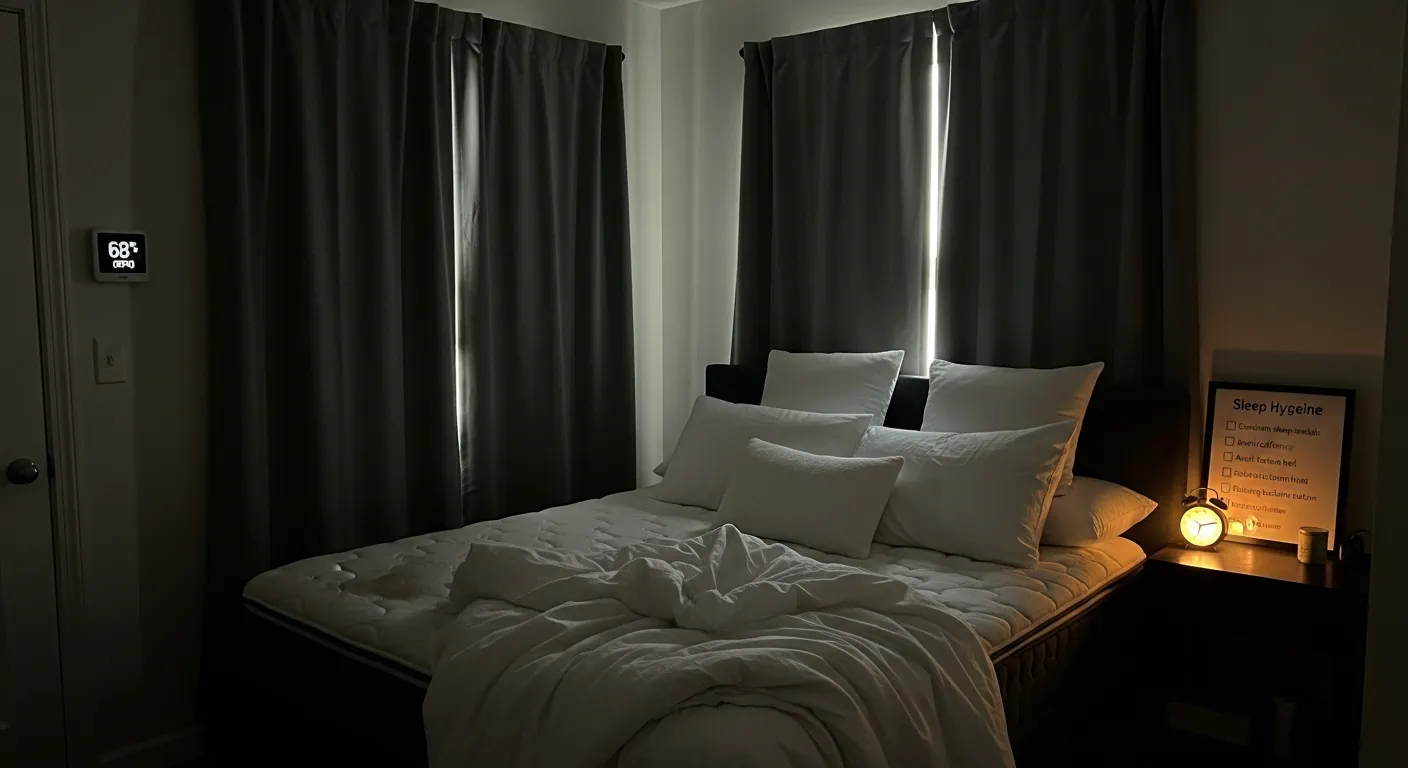
Understanding and practicing good sleep hygiene can significantly improve sleep quality and aid in the diagnosis of primary insomnia. Effective strategies include maintaining a consistent sleep schedule, creating a relaxing bedtime routine, and ensuring your bedroom is dark, quiet, and cool.
Sleep Apnea: Recognizing the Signs and Securing a Diagnosis
Sleep apnea is a potentially serious sleep disorder where breathing repeatedly stops and starts during sleep. These pauses, called apneas, can last from a few seconds to minutes and may occur 5 to 30 times or more per hour. This disruption leads to fragmented sleep and reduced oxygen levels, impacting overall health. Recognizing sleep apnea symptoms is vital for early intervention.
Key Sleep Apnea Symptoms:
- Loud snoring: Often described as gasping or choking sounds.
- Pauses in breathing: Observed by a bed partner.
- Daytime sleepiness: Excessive fatigue despite seemingly adequate sleep.
- Morning headaches: A common result of disrupted oxygen flow.
- Irritability and difficulty concentrating: Cognitive impairments from poor sleep.
- Frequent nighttime urination: Nocturia, potentially linked to sleep-disordered breathing.
Identifying Sleep Apnea Signs: The Diagnostic Process
The gold standard for diagnosing sleep apnea is a polysomnography (PSG), an overnight sleep study conducted in a lab. During a PSG, various bodily functions are monitored, including brain activity (EEG), eye movements (EOG), muscle activity (EMG), heart rate (ECG), breathing patterns, oxygen saturation, and limb movements. This comprehensive data allows sleep specialists to determine the type and severity of sleep apnea. Home sleep apnea tests (HSATs) are also becoming more prevalent for straightforward cases of obstructive sleep apnea (OSA), offering a convenient alternative.
Differentiated Insight: Personalized Treatment Pathways Beyond CPAP
While Continuous Positive Airway Pressure (CPAP) remains the primary treatment for sleep apnea, a significant trend in sleep medicine is the move towards personalized treatment pathways. Beyond CPAP, options like oral appliance therapy (OAT) for mild-to-moderate OSA, hypoglossal nerve stimulation for those intolerant to CPAP, and even myofunctional therapy are gaining traction. A clinical review published in the American Journal of Respiratory and Critical Care Medicine in 2023 emphasized tailoring treatment based on anatomical factors, severity, and patient preference, leading to higher adherence and better outcomes. This underscores the need for a thorough diagnosis that informs a customized therapeutic strategy, moving beyond a "one-size-fits-all" approach.
Restless Legs Syndrome (RLS): Understanding the Urge to Move
Restless Legs Syndrome (RLS), also known as Willis-Ekborn Disease, is a neurological disorder characterized by an irresistible urge to move the legs, typically accompanied by uncomfortable sensations. These sensations are often described as creeping, crawling, tingling, pulling, or aching. The symptoms usually worsen during periods of rest or inactivity, especially in the evening or night, and are temporarily relieved by movement. This can severely disrupt sleep and overall quality of life.
Distinctive RLS Symptoms:
- Unpleasant leg sensations: Often deep within the legs, not on the skin.
- Urge to move: Compelling need to walk, stretch, or kick.
- Worsening at rest: Symptoms intensify when sitting or lying down.
- Relief with movement: Temporary improvement from walking or stretching.
- Evening/night predominance: Symptoms are most troublesome during these hours.
Managing Restless Legs Syndrome: Diagnosis and Treatment
RLS diagnosis is primarily clinical, based on the patient's description of symptoms. The International Restless Legs Syndrome Study Group (IRLSSG) has established four essential criteria: an urge to move the legs, onset or worsening during rest, partial or total relief by movement, and worsening in the evening or night. Blood tests may be performed to check for iron deficiency, a common contributing factor. In some cases, a sleep study might be conducted to rule out other sleep disorders or to detect periodic limb movement disorder (PLMD), which often co-occurs with RLS.
Internal Link: Exploring Therapeutic Approaches for Sleep
For insights into how different therapies can address sleep challenges, including those related to RLS, consider exploring cognitive behavioral therapy for insomnia approaches.
Empowering Your Journey to Better Sleep Diagnosis
Navigating specific sleep disorders like insomnia, sleep apnea, and restless legs syndrome can be complex, but armed with knowledge, you are better positioned to advocate for your health. A better diagnosis hinges on accurate symptom reporting, understanding the diagnostic processes, and engaging openly with your healthcare provider. Remember, untreated sleep disorders can lead to long-term health consequences, emphasizing the importance of seeking professional help.
Frequently Asked Questions (FAQ)
Q: What's the first step if I suspect I have a sleep disorder?
A: The very first step is to consult your primary care physician. Describe your symptoms thoroughly, noting when they occur, how long they last, and what, if anything, provides relief. Your doctor can assess your general health, rule out other conditions, and determine if a referral to a sleep specialist or neurologist is necessary for a more detailed evaluation.
Q: Can lifestyle changes help before getting a formal diagnosis?
A: Absolutely. Implementing good sleep hygiene practices can significantly improve sleep quality for many people, even those with underlying disorders. This includes maintaining a consistent sleep schedule, creating a dark and quiet sleep environment, avoiding caffeine and heavy meals before bed, and regular exercise. While not a cure, these changes can often alleviate symptoms and provide clearer symptom patterns for diagnosis.
Q: How reliable are home sleep tests for diagnosing sleep apnea?
A: Home sleep apnea tests (HSATs) are generally reliable for diagnosing moderate to severe obstructive sleep apnea (OSA). They measure key parameters like breathing effort, airflow, and oxygen levels. However, they may not be as comprehensive as an in-lab polysomnography for complex cases or central sleep apnea. Your doctor will determine if an HSAT is appropriate based on your symptoms and risk factors.
Q: Is it possible to have more than one sleep disorder at the same time?
A: Yes, it is quite common to have co-occurring sleep disorders. For example, individuals with restless legs syndrome often also experience periodic limb movement disorder (PLMD), and insomnia frequently accompanies other conditions like sleep apnea or chronic pain. A comprehensive diagnostic process helps identify all contributing factors, leading to a more integrated and effective treatment plan.
Conclusion and Next Steps
We hope this detailed guide has illuminated the paths to navigating specific sleep disorders for a better diagnosis. Understanding the distinct characteristics of insomnia, sleep apnea, and restless legs syndrome is paramount. If you suspect you or a loved one might be experiencing any of these conditions, don't delay. The journey to restorative sleep begins with recognizing the problem and seeking expert help.
Your Next Steps:
- Consult a Sleep Specialist: Discuss your symptoms with a healthcare professional to initiate the diagnostic process.
- Maintain a Sleep Diary: Track your sleep patterns, symptoms, and potential triggers to provide valuable data.
- Engage in Good Sleep Hygiene: Explore practices that can immediately improve your sleep environment and habits.
- Share Your Insights: Help others by sharing this guide with anyone you know struggling with sleep issues.
Expand Your Knowledge:
- Understanding Sleep Study Results: What do all those graphs and numbers mean? (Future Article)
- The Impact of Diet on Sleep Quality: Exploring nutrition's role in healthy sleep. (Future Article)
- Advances in Sleep Technology: Beyond CPAP, what's next for sleep treatment? (Future Article)